 Canadian Dollars
 US Dollar
 Euro
Euro


Product Description
Taylor Total Alkalinity Indicator - 16oz Bottle
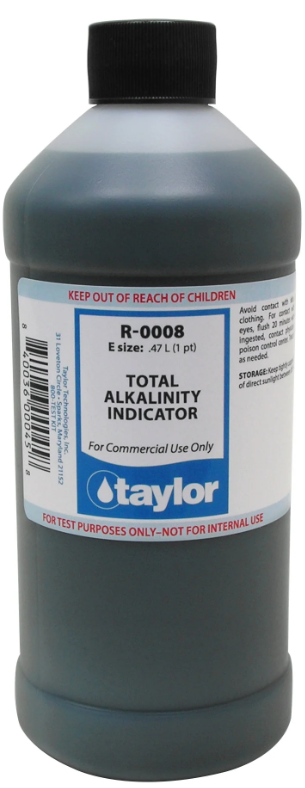
Total alkalinity in a pool refers to its ability to resist changes in pH, acting as a buffer against acids and bases. It's a measure of the pool water's capacity to neutralize acids, preventing sudden or drastic shifts in pH levels. The recommended total alkalinity range for pools is typically between 80 and 120 parts per million (ppm).
Here's a more detailed explanation:
What Total Alkalinity Does:
- pH Buffer:
Total alkalinity (TA) is the water's buffer against wide pH swings. It helps maintain a stable pH level, preventing it from fluctuating drastically due to factors like rain, debris, or chemical additions. - Neutralizes Acids and Bases:
It measures the concentration of alkaline substances like carbonates, bicarbonates, and hydroxides that can neutralize acids and bases. - Impact on Sanitizer Efficiency:
Appropriate TA levels optimize the efficiency of pool sanitizers, like chlorine.
Why Maintaining Total Alkalinity is Important:
- Stable pH:
Low TA can lead to pH bouncing up and down, while high TA can cause pH to drift upward. - Equipment Protection:
Low TA can cause corrosion of pool surfaces, metal fixtures, and damage to equipment. - Water Clarity:
High TA can lead to cloudy water and scale buildup. - Comfort:
Proper TA levels contribute to a more comfortable swimming experience, preventing skin and eye irritation.
In essence, total alkalinity is a crucial aspect of pool water chemistry, impacting pH stability, equipment longevity, and overall swimming comfort. Maintaining it within the appropriate range is essential for a healthy and enjoyable pool environment.


